
Arrest Warrants in Fort Bend County
An arrest warrant in Fort Bend County lets officers take someone into custody once a judge or magistrate weighs sworn facts and finds probable cause. A peace officer or a prosecutor starts the ball rolling with a complaint or affidavit. The magistrate reads those facts first. Only then does the court issue its order. That is a different animal from a search warrant, which authorizes a search under Chapter 18 rather than an arrest. Once the paper is signed, the responsible agency enters it and serves it, and the arrested person goes before a magistrate for warnings and a bond decision. The court that issued the warrant and the office that served it may not be the same.
Probable Cause in Fort Bend County
Probable-cause hearings in Fort Bend County, along with warrant requests from local agencies and from other counties, run through the county Magistrate Court. When it sets bond, it weighs the alleged facts, a risk assessment of pretrial conduct, financial ability, and a person's history of showing up to court. Bond is set case by case. There is no single countywide schedule. The Magistrate Court description lays out these probable-cause and bond duties in full. A court or an attorney can tell you what the current issuing order actually requires.
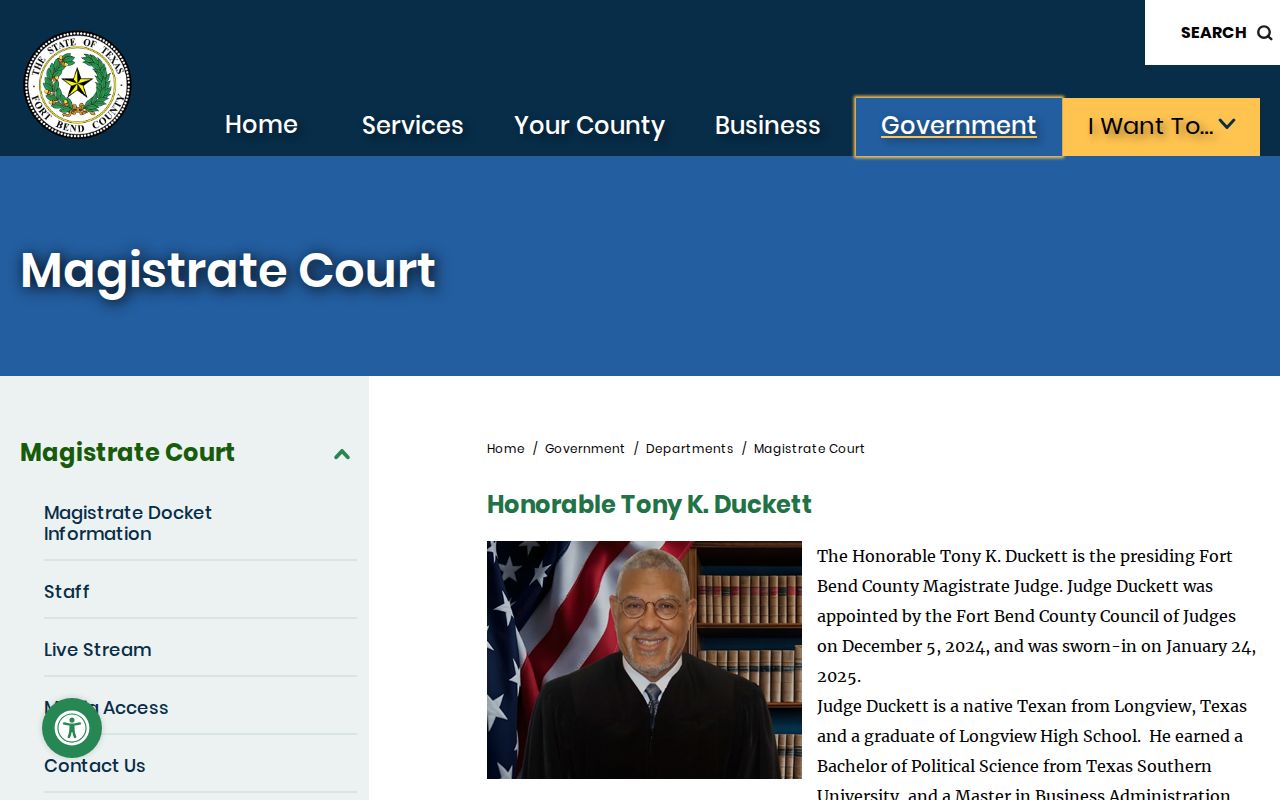
This review is case-specific and does not create a public warrant search.
Arrest Warrants: What They Contain
A warrant record can tie together a person, a charge, a court, a date, a bond, and the agency serving the paper. Fort Bend County has no single public warrant-number format. What shows up depends on the court and on whether the record is open to the public.
| Cause number | Format varies by court |
|---|---|
| Named person | Identity fields may include name and other descriptors in a public list |
| Charge | Offense or complaint basis, subject to record limits |
| Issuing court | Judge or magistrate and court with authority over the case |
| Bond | Amount and type, if set and released in the record |
| Issue / return | Issue date and service, execution, or return detail may appear |
Fort Bend Sheriff Unit and Extradition
The Fort Bend County Sheriff's Fugitive Apprehension Unit finds and arrests people named on criminal warrants. It also handles criminal writs of attachment, places holds in other jails, and runs extraditions. Coordinators keep the warrant data current and enter or remove TLETS records. There is one privacy rule to know. Ordinary phone and email inquiries get no status confirmation. To check your own name, visit in person with photo ID; an attorney or bonding company may fax a request on official letterhead. Before you drive out, verify the right entrance: the facility directory and the TPIA form list 1840 and 1410 Richmond Parkway, respectively, and that mismatch is easy to get wrong.
Serving Warrants in Fort Bend County
In Fort Bend County, warrant service splits by court. The Sheriff's Unit serves county criminal process and coordinates fugitives and extradition. Constables handle Justice Court criminal warrants, while municipal police or marshals serve warrants from their city courts. A city or JP warrant can sit outside the Sheriff's public-facing channels entirely. After an arrest, booking and magistration follow, and a magistrate may set an individualized bond. The Sheriff publishes no warrant surrender window or jail bond-counter hours. Confirm arrangements with your lawyer, the issuing court, or an approved bonding company before you travel.
Fort Bend Magistrate Bond Factors
Fort Bend County's Magistrate Court spells out what it looks at on bond: the alleged offense facts, a risk assessment, ability to pay, and whether the person has shown up to court before. A bond secures release and future appearance, nothing more. It does not dismiss the underlying charge, and it does not guarantee another agency's entry disappears. Cash, surety, personal recognizance, attorney bond, or a hold may all apply depending on the court and the offense. There is no countywide bond schedule and no published jail bond-window payment rules. Ask the court about the bond and the case's next setting together.
Arrest Warrants, Summonses, and Bench Warrants
A summons orders a person to appear; an arrest warrant in Fort Bend County authorizes officers to take someone into custody. A bench or failure-to-appear warrant usually follows a missed court obligation. Read the court's own label and ask the clerk what action it requires.
| Feature | Arrest Warrant | Summons | Bench Warrant |
|---|---|---|---|
| What it orders | Arrest and custody | Appear at a stated time | Return to court after noncompliance |
| Basis | Probable cause on sworn facts | Notice to answer a charge | Missed date or court condition |
| Who issues it | Judge or magistrate | Court or authorized officer | Judge in the existing case |
| Next step | Ask counsel about bond and appearance | Attend as directed | Ask issuing court about recall or reset |
City and Constable Service Roles
Where a Fort Bend County case lives depends on the paper that started it. A city citation can stay with a municipal court, while a traffic or Class C citation may belong to one of seven JP benches. County constables describe themselves as custodial for JP criminal warrants. The Sheriff, for his part, handles county criminal warrants and extraditions. Even when another agency serves the paper, the issuer's court is where you ask for a recall. Federal matters follow a different map: Fort Bend sits in the Southern District of Texas Houston Division, where the U.S. Marshals and partner agencies chase federal fugitives. A county case portal is not a federal warrant lookup. The federal court's Houston Division page lists Fort Bend within its jurisdiction.
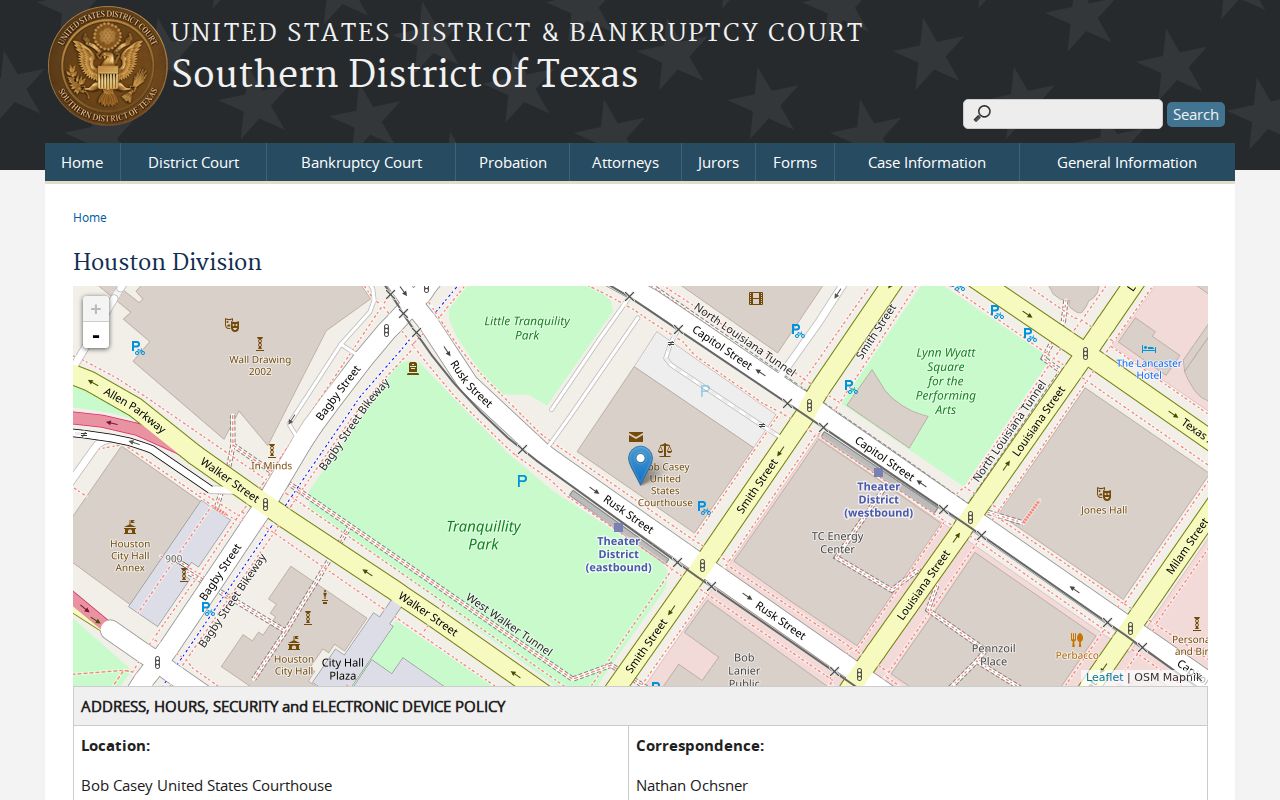
Use the federal court route only when the case itself is federal.
Handling an Arrest Warrant in Your Name
For a county criminal warrant in your own name, use the Sheriff's photo-ID process to confirm it. If you have a cause number, name the court and ask whether the warrant is active, recalled, served, or tied to a hold. A lawyer or bonding company can use the official fax route and help arrange a lawful appearance, surrender, or bond. Ask the issuing court how a recall reaches the serving agency. Hold on to your bond receipt, the order, and the next court date. Fort Bend County's Sheriff posts no same-day phone confirmation and no walk-in surrender procedure.
Important: If you think a county arrest warrant is active, consult a Texas attorney or the issuing court before choosing how to appear or arrange bond.
PACER's fee guide explains what it costs to view federal court dockets. Federal filings take a separate records route from any Fort Bend County arrest warrant.
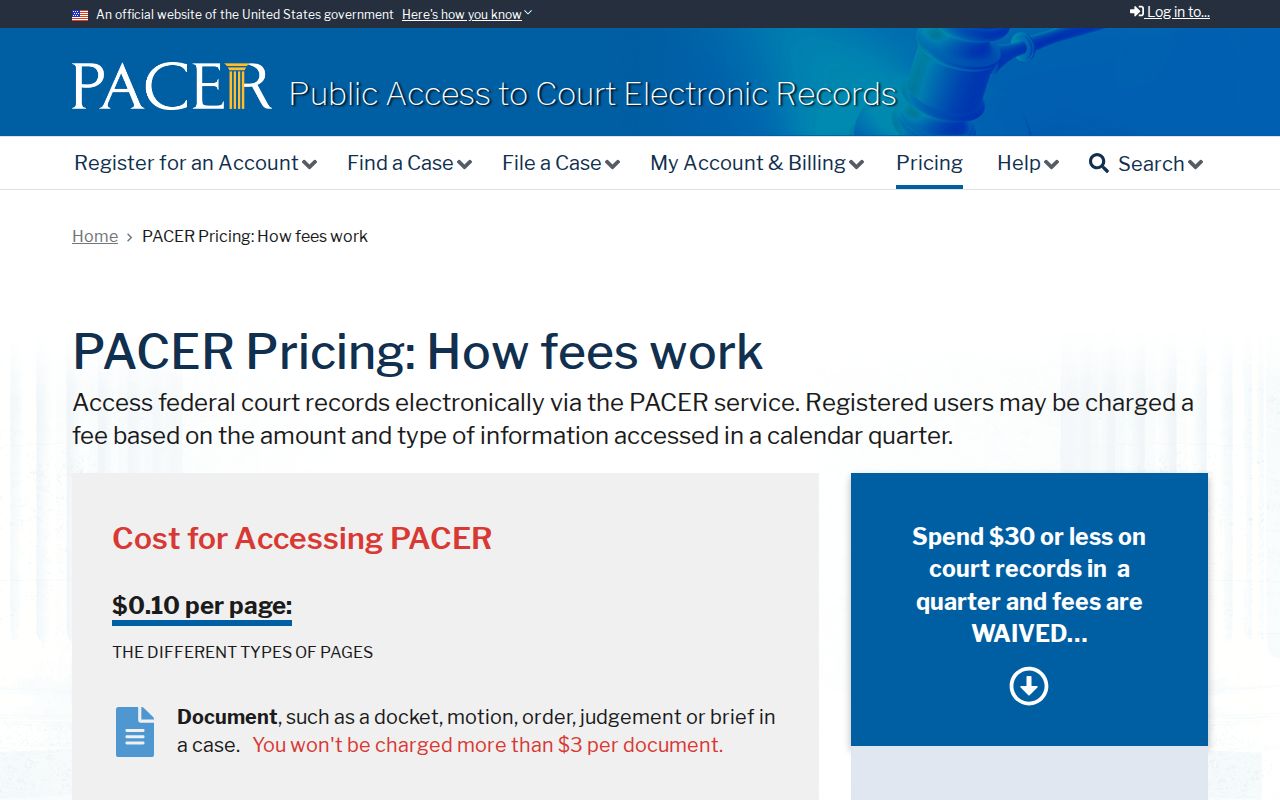
Federal docket fees and sealed filings sit apart from a Fort Bend County Sheriff warrant check.
Executed Warrant Access in Texas
Texas Code of Criminal Procedure Article 15.26 makes an executed arrest warrant and its supporting affidavit public information once the warrant has been served. Where you file the request decides the rules you follow. A court request goes through court-record rules; a request to the Sheriff runs under the Texas Public Information Act, and an exception can limit what comes back. Juvenile warrants stay confidential under Family Code Section 58.010. One caution applies in Fort Bend County. Seeing the paper is not a status check, so ask the issuing clerk or Sheriff whether the warrant was served or recalled.